

Highlights from
FY 2025: Annual Report
Data-Driven Climate Solutions
Making sound decisions about climate solutions depends on timely, reliable, and accessible data. Nicholas Institute experts are contributing valuable data on global greenhouse gas emissions and helping Duke students develop data savvy while tackling climate research challenges.
Highlight
Duke Research Sheds Light on Building-Sector Emissions Worldwide
During COP29 in Azerbaijan, the global Climate TRACE coalition—which counts Duke University as a member—released the largest and most comprehensive inventory of human-caused greenhouse gas emissions to date. Leveraging advanced technologies to trace emissions back to their sources, Climate TRACE has since begun publishing monthly data releases to provide timelier information for decisionmaking.
Duke’s Energy Data Analytics Lab is contributing to Climate TRACE’s massive dataset with the highest-resolution data available on direct emissions from buildings, which account for nearly 7% of global emissions. The Duke team applies machine learning techniques to satellite imagery to generate neighborhood-level estimates of emissions from residential and nonresidential buildings, such as retail, warehouses, hospitals, and schools.
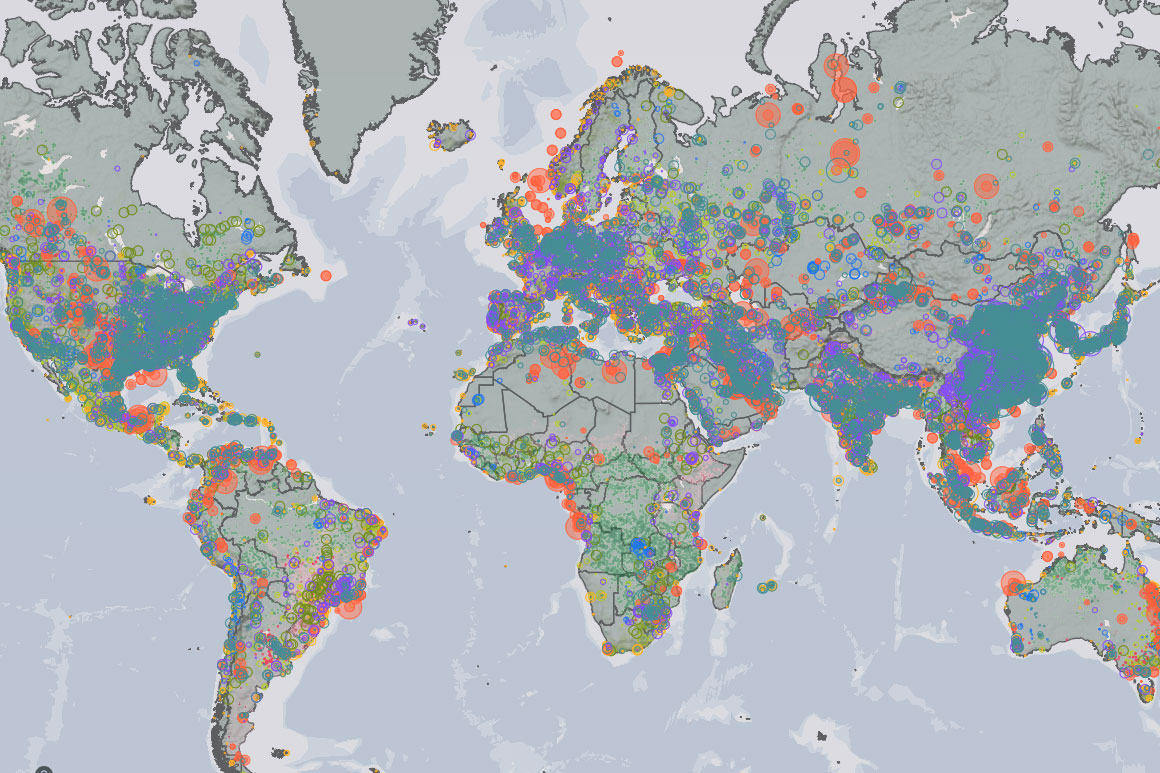
Our data for buildings help Climate TRACE provide a detailed picture of emissions sources at a high spatial resolution and illuminate high-impact mitigation opportunities at all levels from national to municipal.

Climate+ Since 2022
student participants
project teams
Highlight
Equipping Climate Data Innovators Through Hands-On Summer Research
Over 10 weeks in summer 2025, more than 30 students on eight Climate+ project teams used data science techniques to research climate challenges and potential solutions. They studied topics such as extreme heat stress, flood hazards, electricity access, and even Duke’s own greenhouse gas data system.
Part of Duke’s Data+ summer program, Climate+ allows students from a range of disciplines to become familiar with data analysis in various forms. Participants have opportunities to learn from visiting science professionals; enhance their climate literacy, data science, and interdisciplinary communication skills; and step outside the classroom setting to understand their impact.
Climate+ is offered by the Nicholas Institute in partnership with the Rhodes Information Initiative at Duke. The program is aligned with the goals of the Duke Climate Commitment, and funding is provided by The Duke Endowment and the Rhodes Information Initiative.
Education Spotlight
One Undergraduate’s Take on Climate+
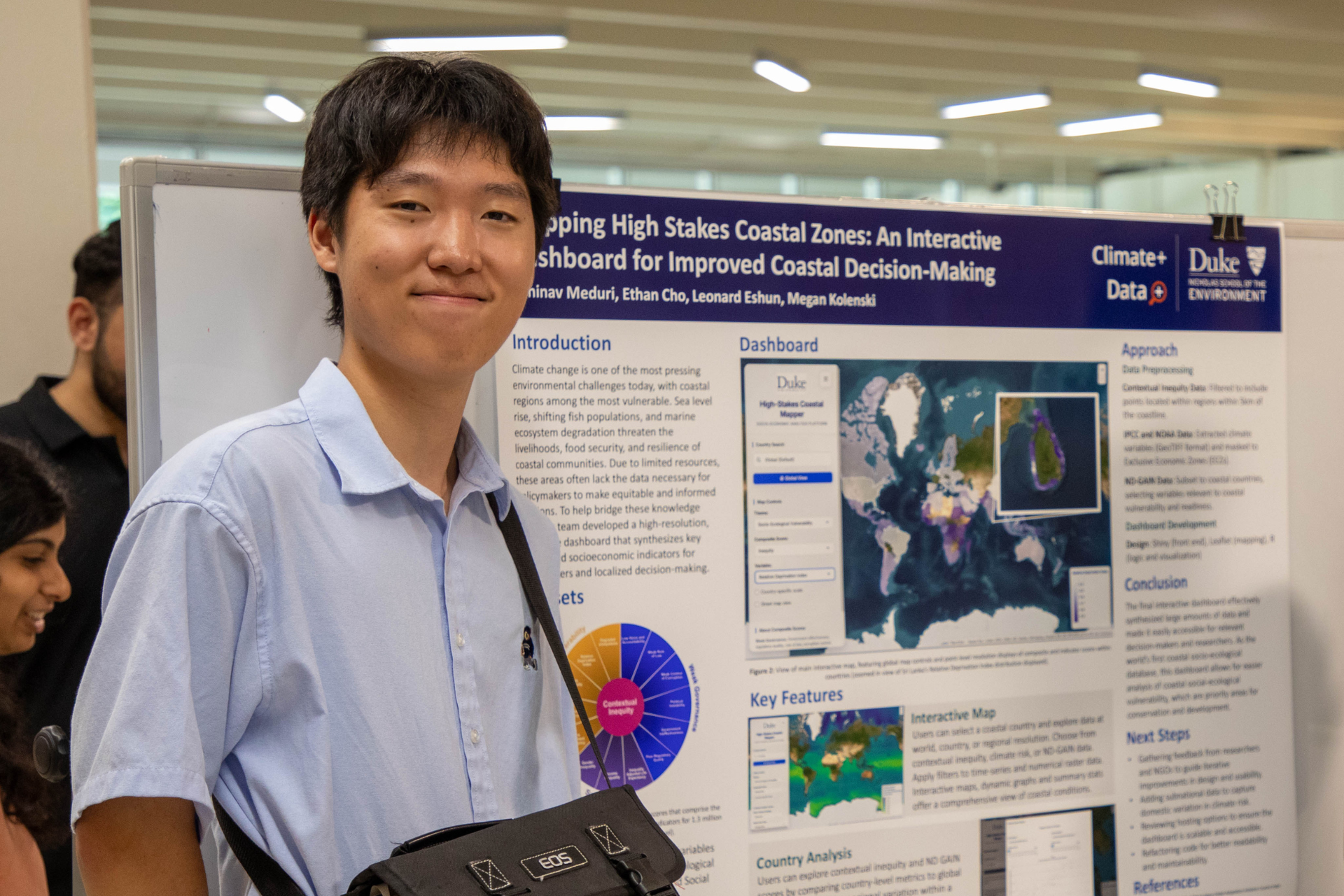
Rising sophomore Ethan Cho took part in a Summer 2025 Climate+ project on mapping high-stakes coastal zones. His team developed an interactive socio-ecological database and dashboard to inform policymaking and local decisions about conservation and development in coastal areas.
“Through Climate+ I was able to examine the intersection of climate science and technology, and came to understand how data science can effectively be used to improve environmental decision-making,” reflected Cho, who is majoring in environmental science and computer science. “Exploring this field through an interdisciplinary data science project solidified my goals and how I want to approach my studies in the environmental field.”